
Buying Land in Portugal Without Environmental Due Diligence: A Multi-Million Risk Hidden Underground
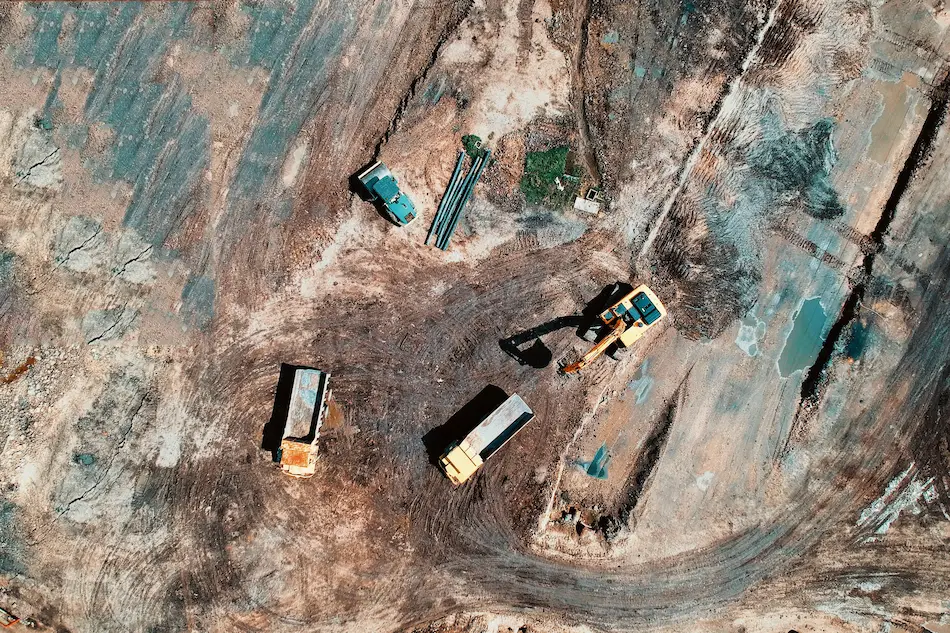
The impact of DL 102-D/2020 and APA guidelines on the management of liabilities and by-products in the real estate sector
The dynamics of the real estate and urban rehabilitation market in Portugal have attracted significant volumes of foreign and domestic capital. However, the rush to close commercial transactions often relegates a crucial technical analysis to the background: the Environmental Due Diligence. Ignoring a land's usage history and the actual condition of its subsoil prior to acquisition is one of the biggest strategic mistakes a developer can make, turning a profitable opportunity into a severe and hard-to-resolve financial liability.
The Concept and Importance of Environmental Due Diligence
Environmental Due Diligence consists of a systematic process for assessing environmental risks and liabilities associated with a specific property or land. Classically divided into phases, Phase I focuses on historical research, site visits, and document analysis, while Phase II involves sampling and laboratory analysis of soils, groundwater, and soil gas. The main objective of this tool is to anticipate contamination scenarios resulting from past industrial activities, repair shops, gas stations, or uncontrolled waste disposal. In Portugal, the legal and financial responsibility for remediation may fall on the new owner under the “polluter-pays” principle or through subsidiary liability, should the original polluter not be identified or held accountable.
The Regulatory Impact of Decree-Law No. 102-D/2020
The legal framework for the management of excavated soil underwent a profound change with the entry into force of Decree-Law No. 102-D/2020 of December 10 (DL-102D/2020) which approved the new General Waste Management Regime (RGGR). This legislation has clarified and, at the same time, tightened the rules regarding what constitutes waste and how excavated materials from construction or rehabilitation work must be managed.
Before this update, there were grey areas that allowed for excessive flexibility in the management of excavated soil. Currently, in light of the RGGR, any excavated soil or rock that shows evidence of contamination or is removed from an area with a history suggesting pollution is categorically classified as **waste**. This triggers strict obligations:
• e-GAR issuance: Mandatory accompaniment by electronic Waste Accompanying Guides.
• Licensed Operators: Mandatory destination for duly authorized treatment or disposal facilities.
• Disposal and TGR Costs: Subject to the payment of high waste management fees (TGR) and landfill reception costs that vary drastically if the soil is classified as hazardous or non-hazardous waste. Beware of the Hidden Cost: The transport and disposal of one cubic meter of contaminated soil as hazardous waste in a licensed landfill in Portugal can cost several times more than its normal handling on-site, completely destroying the projected profit margin for the project.
The APA Technical Note and the Challenge of By-products
To mitigate the economic impact and promote the circular economy, the RGGR provides for the concept of **by-product** (Article 9). However, the practical application of this concept to excavated soil and rock is strictly bounded by the guidelines of the Portuguese Environment Agency (APA), specifically through its technical guidance notes (APA Technical Note – By-product).
For the soils resulting from an excavation not to be classified as waste, but rather as by-products (allowing their direct reuse in another project or engineering work), the developer must cumulatively prove four strict conditions:
| Legal Requirement | Practical Implication for the Field |
|---|---|
| Certainty of reuse | Existence of a construction plan or immediate and contracted final destination. |
| Direct use | The soil must be able to be used without any pre-processing other than normal industrial practice. |
| Integral production | Excavation must be an integral part of a production or construction process. |
| Compliance with criteria | Absence of negative impacts on human health and the environment, proven by environmental laboratory analyses. |
It is in this last point that the great risk of contamination lies. APA's Technical Note defines that if the soil reveals concentrations of polluting substances (such as heavy metals, hydrocarbons, or solvents) above the acceptable reference values for the intended land use (Reference Values for Soil), classification as a by-product is strictly refused. Without the by-product classification, what would be a reusable resource instantly turns into a massive volume of waste. If the investor bought the land without knowing that the subsoil was contaminated, they will inherit the full financial cost of managing this waste during the excavation and foundations phase.
The Financial and Legal Risks of Omission
The risks associated with the absence of a structured DDA are divided into three fundamental pillars:
1. Inviability or Embargo of Works
During the licensing phase or the execution of excavations, the discovery of undeclared environmental liabilities can lead to the immediate suspension of work by the competent authorities (such as IGAMAOT or the territorially competent CCDR). Delays in a real estate project's schedule generate brutal financial costs related to bank financing and contractual defaults with contractors and future buyers.
Administrative Offence and Criminal Liability
Improper management of contaminated soil, such as its deliberate mixing with clean soil or illegal dumping on other land, constitutes a very serious environmental misdemeanor under the Portuguese Environmental Legislation Framework, subject to severe fines that can amount to hundreds of thousands of euros for legal entities, in addition to potential criminal penalties for the crime of pollution.
3. Drastic Asset Devaluation A plot of land preliminarily valued at a high commercial price can lose a large part of its market value if a groundwater contamination plume is identified that requires an active remediation system (such as pump and treat) to remain operational for years.
Strategic Recommendations for Investors
To effectively mitigate these risks in the current regulatory context in Portugal, the adoption of the following best practices is recommended before signing any promissory contract for the purchase and sale of property (CPCV):
1. Inclusion of Suspensive Clauses: Condition the effectiveness of the purchase on the performance of a DDA with satisfactory results and without the detection of liabilities exceeding a certain remediation ceiling value.
2. Rigorous Historical Audit: Evaluate old operating permits, industrial registries, and historical aerial photographs to identify potential pollution sources (e.g., old underground storage tanks). 3. Robust Sampling Plans: If the historical data is suspicious, immediately proceed to a drilling campaign involving the collection of soil and groundwater samples, analyzed by accredited laboratories, and compare the results against the reuse guidelines of the APA and Decree-Law No. 102-D/2020.
Conclusion
Environmental Due Diligence in Portugal has ceased to be a mere corporate formality or a whim of institutional investors. Given the rigor of Decree-Law no. 102-D/2020 and the strict surveillance of the APA regarding the by-product economy, subsurface assessment is an indispensable tool for financial and legal risk management. Ensuring that the acquired area is not contaminated is the only safe way to guarantee the profitability and sustainability of any contemporary real estate project.